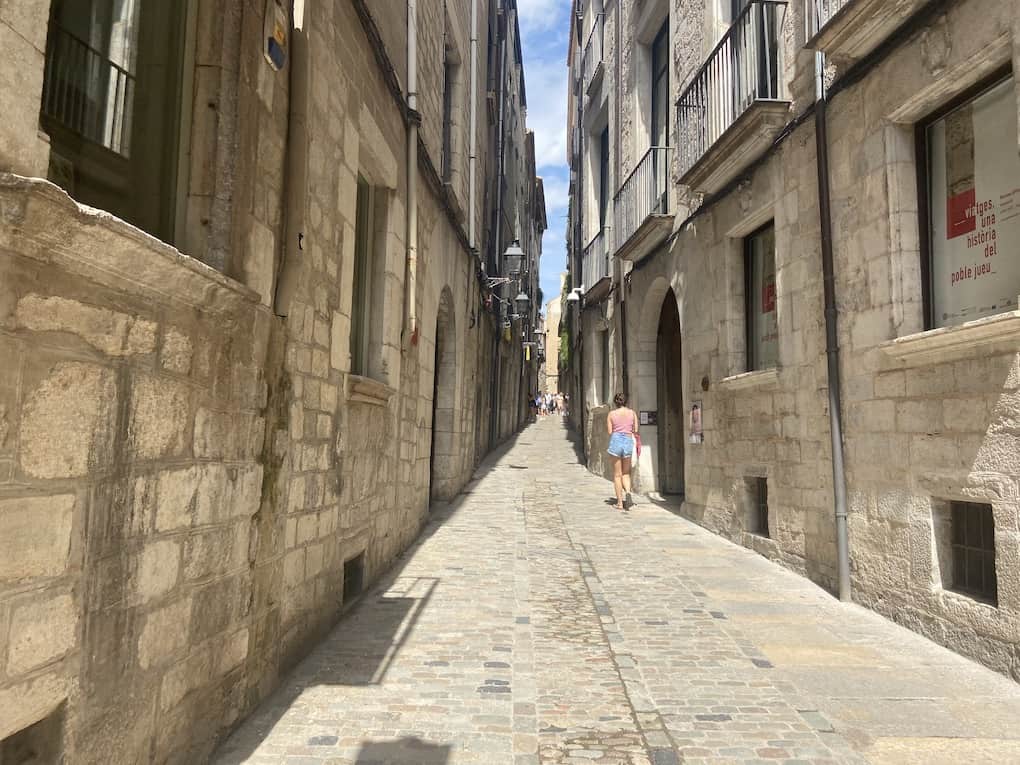
Girona Jewish Quarter
Did you know that Girona’s Jewish quarter is one of the best preserved in Europe?
Today, the Call —or the Jewish Quarter— is one of the most emblematic areas of the Força Vella and Girona. The Jewish Quarter of Girona is undoubtedly a must-see for visitors to the city.
That’s why the aim of this post is to help you get to know it better before you come to see it.
Girona Jewish Quarter: a brief history
As early as the year 888, a document mentioned the presence of a Jewish community in Girona.
However, this community did not begin to gain much relevance until the 12th century, when they were already forming a small community in Carrer de la Força.
This small community remained until the end of the 15th century. But during its last decades in Girona, it was subjected to great repression: they were confined to their quarter and had to identify themselves with a red circle to leave it.
Their expulsion took place in 1492, when the Catholic Monarchs issued an edict forcing the Jews to leave the country unless they converted to Christianity.
What to see in the Jewish Quarter of Girona
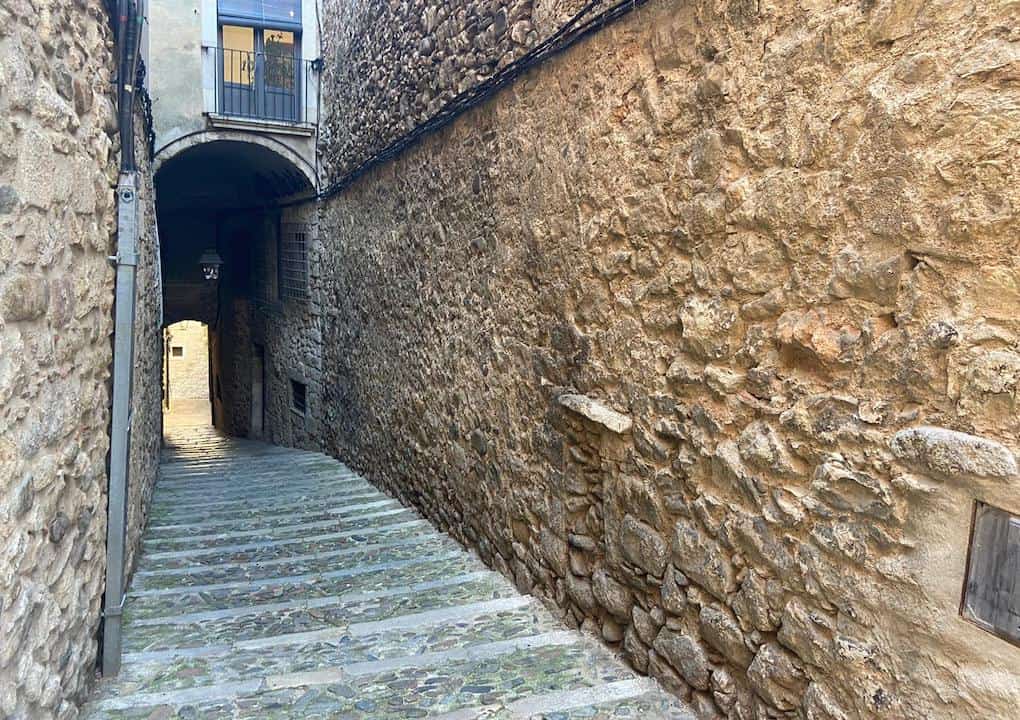
Just wandering through its medieval alleyways is already a great reason to visit. But here are some highlights you can’t miss:
The Bonastruc Ça Porta Center (The Museum of Jewish History of Girona)
Located in the center of the Jewish Quarter, it is believed to have been the last synagogue in Girona.
Today, this building houses the Center for Jewish Studies and the Museum of Jewish History, a place that attracts thousands of tourists every year.
It explains the history of medieval Jewish communities in Catalonia, especially in Girona.
It offers a broad view of their history, gastronomy, and culture.
The goal of the Jewish Museum of Girona is to value the Jewish heritage of the city and make it known to the general public.
One of the museum’s highlights is its collection of medieval Hebrew tombstones, rescued from the Jewish cemetery of Montjuïc. This cemetery was located north of the city, outside the walls, on Montjuïc mountain (Mountain of the Jews).
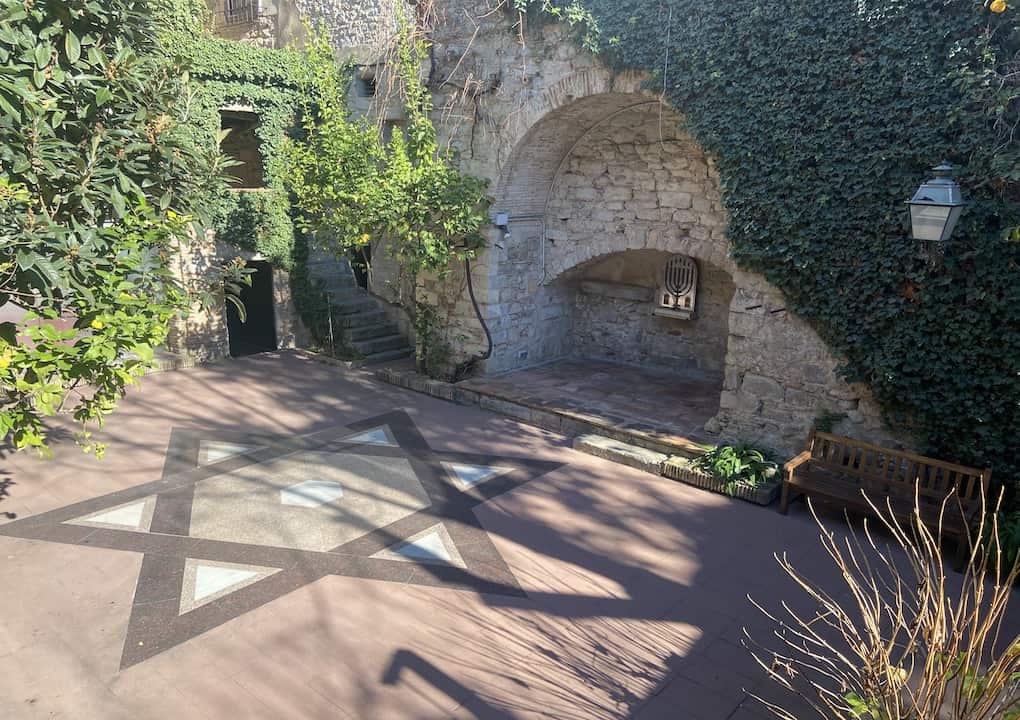
The streets of the Jewish Quarter of Girona
As we mentioned at the start, the streets themselves are the perfect place to get lost and immerse yourself in medieval Jewish Girona.
In tourism, this quarter has been key in attracting visitors from all over the world. That’s why no one visits Girona without taking a walk through its alleyways.
It’s part of the city’s identity.
The Placeta del Institut Vell
At the end of Carrer de la Força, you’ll find this little square, where you can see several buildings that bear witness to the Jewish presence in medieval Girona.
One of these buildings is the Canonja Vella, a structure dating back to the 12th century.
The Pabordia
This name refers to a group of buildings that housed public baths between the 13th and 14th centuries. To get there, you must walk up the Subida de la Virgen de la Pera.
Subida de la Virgen de la Pera
Head to the right of Carrer de la Força.
If you follow this uphill street, you will reach one of the old town’s arcades that mark the upper limit of the Jewish Quarter of Girona.
Have you planned your visit to the Jewish Quarter of Girona?
We hope we’ve helped you prepare your visit to Girona’s Jewish Quarter.
If you want to take home a much more vivid memory of Girona and the Jewish Quarter, we recommend joining one of our tours.
We have local guides who will tell you all the history behind the streets and give you a broader insight into what the medieval Jewish quarter of Girona was like.
Take a look at our Girona Jewish Tour and the medieval walls.
The visit includes tickets to the Museum of Jewish History in Girona.
Are you in?